Financial Due Diligence
Structured financial due diligence to validate business quality before closing the transaction.
Rigorous Quality of Earnings, net debt and working capital analysis through guided phases. Identify red flags and adjustments before they become post-closing surprises.
Why traditional due diligence fails
Manual DD processes are slow, error-prone and cannot keep up with deal-flow pace.
Unstructured, ad-hoc analysis
Without a fixed framework, every analyst approaches DD differently. Findings get lost in emails and spreadsheets without traceability.
Red flags discovered too late
EBITDA adjustments, hidden debt or working capital seasonality surface in late stages, when price is already negotiated.
Inconsistent IC deliverables
Investment committee packages vary in format and depth. Partners waste time requesting clarifications.
Complete due diligence in a single platform
Every DD phase is automated with checks, bridges and professional exports.
Quality of Earnings (QoE)
Systematic revenue and cost analysis to determine normalized, recurring EBITDA. Identifies pro-forma adjustments and non-recurring items.
Net debt analysis
Net financial debt calculation with debt-like item identification, contingent liabilities and restricted cash adjustments.
Working capital (NWC)
Working capital normalization with seasonality analysis, trends and NWC target calculation for the pricing mechanism.
Red flag detection
Automatic system flagging risks: customer concentration, supplier dependency, pending litigation and tax contingencies.
Guided phases & checklists
Sequential 6-phase workflow with checklists, milestones and completion percentage. Cannot skip critical steps.
Phase-by-phase reports
Export partial reports at each phase to keep the investment committee informed throughout the process.
Accounting vs management bridges
Automatic reconciliation between audited financial statements and management figures with variance explanations.
Data room document support
Generates the document base needed for the virtual data room with structured index and cross-references.
Pricing structure (SPA)
Support for enterprise value definition, equity bridge, completion accounts and locked box mechanisms.
Multi-year trend analysis
Revenue, margin, working capital and debt trend visualization across 3-5 fiscal years with growth rates.
Automatic quality alerts
The engine detects accounting inconsistencies, magnitude jumps and missing data before they affect analysis.
Professional AI narrative
SofIA generates Big 4-quality narratives for each report section, explaining findings and adjustments with rigorous tone.
Structured due diligence methodology
A repeatable framework covering the three key areas of every financial DD.
Quality of Earnings (QoE)
Top-down revenue and bottom-up cost analysis to determine sustainable EBITDA. Adjustment taxonomy: non-recurring, pro-forma, normalization and run-rate.
Net debt & equity bridge
Exhaustive net financial debt calculation with debt-like items, cash-like items and adjustments. Enterprise value to equity value bridge.
Normalized working capital
NWC target based on normalized average, adjusted for seasonality and trends. Basis for pricing mechanism (completion accounts / locked box).
How it works
Guided 5-step process ensuring complete due diligence coverage.
Import data
Upload audited financial statements and management figures from Excel.
Quality of Earnings
Analyze revenue, costs and EBITDA with automatic adjustment identification.
Net debt
Calculate net financial debt with debt-like items and equity bridge.
Working capital
Normalize NWC with seasonality analysis and target calculation.
Export report
Generate complete FDD report in PDF and DOCX with professional narratives.
Use case: Buy-side DD for PE fund
How a PE team accelerated their due diligence process while maintaining analytical rigor.
Private equity fund evaluating the acquisition of a distribution company with €28M revenue. 3-week exclusivity period with data room open.
FDD completed in 8 days with 6 QoE adjustments identified (€1.2M EBITDA impact), 2 debt-like items and NWC target calculated for completion accounts.
Due diligence report sample
Structured reports with findings, quantified adjustments and professional narrative.
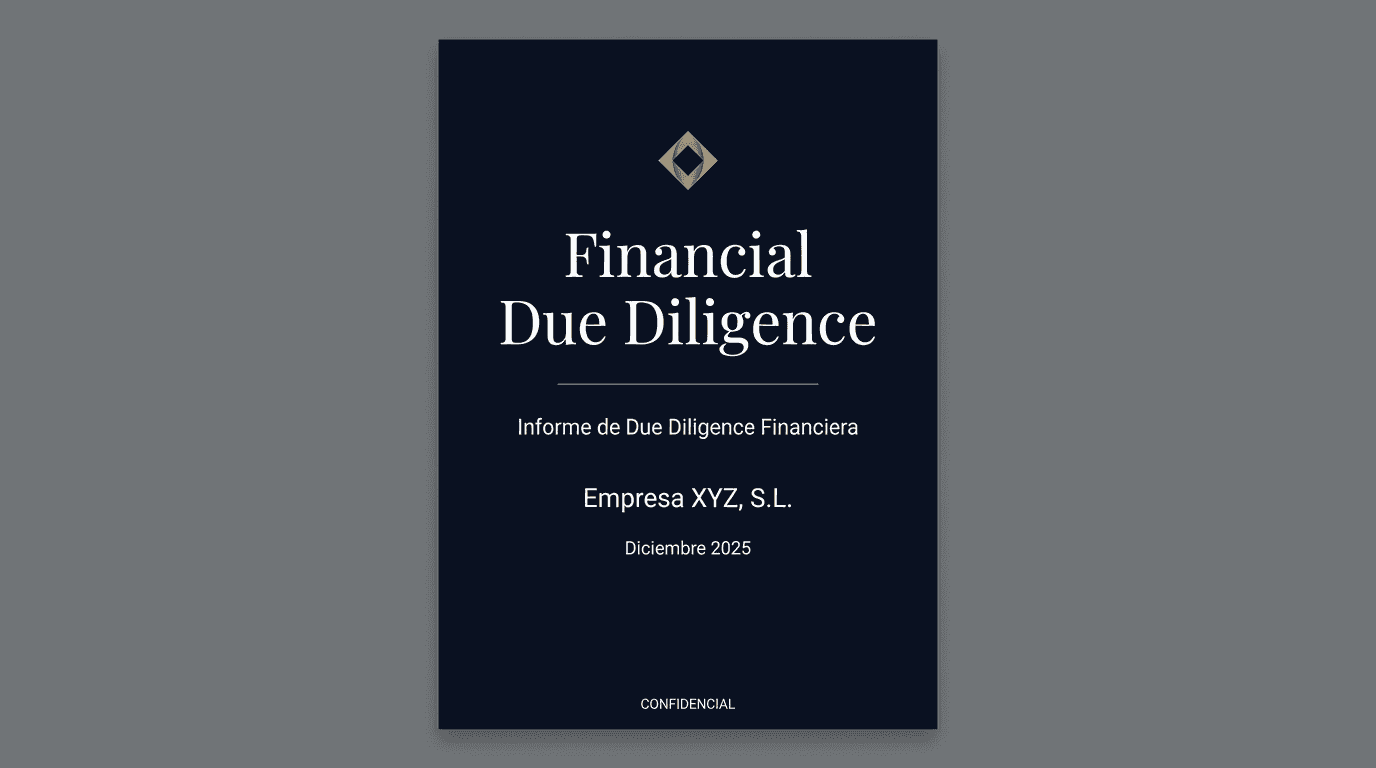
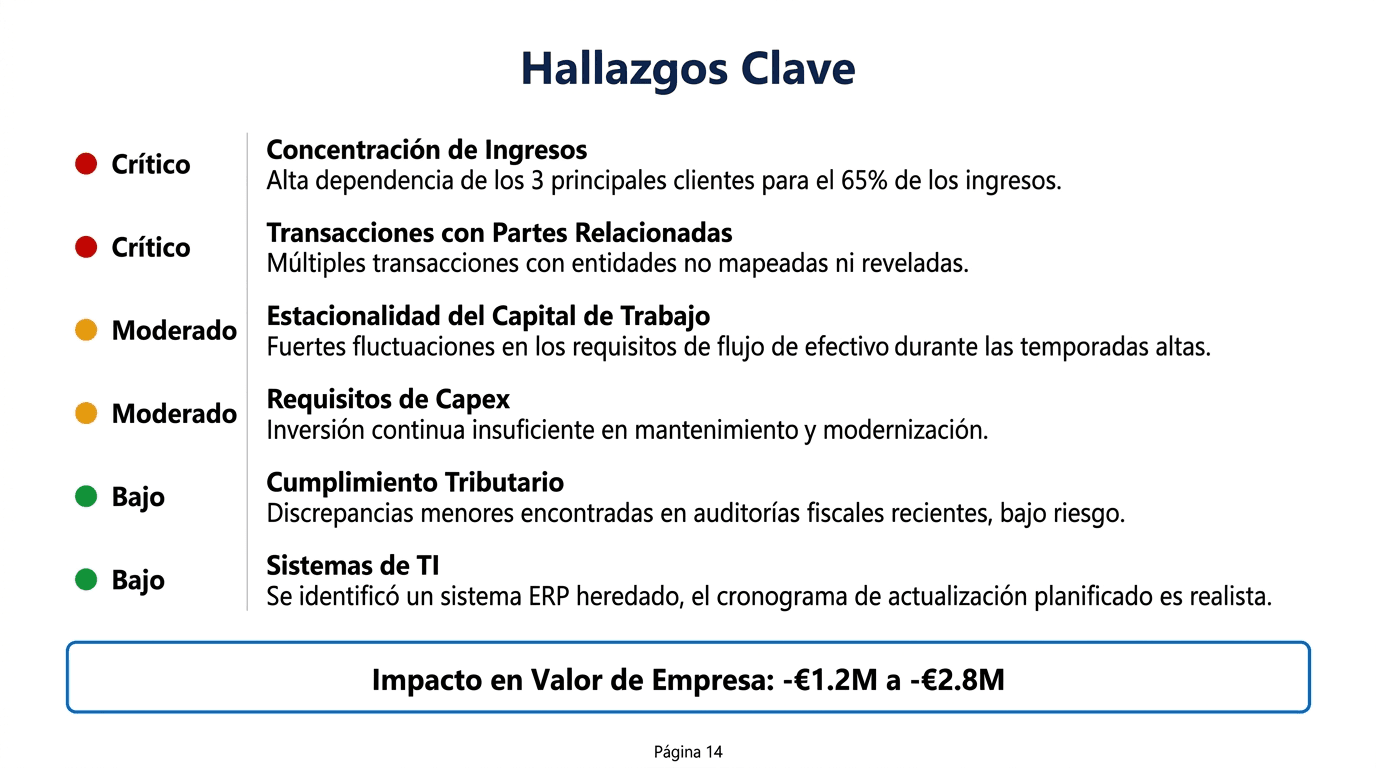
Executive summary & findings
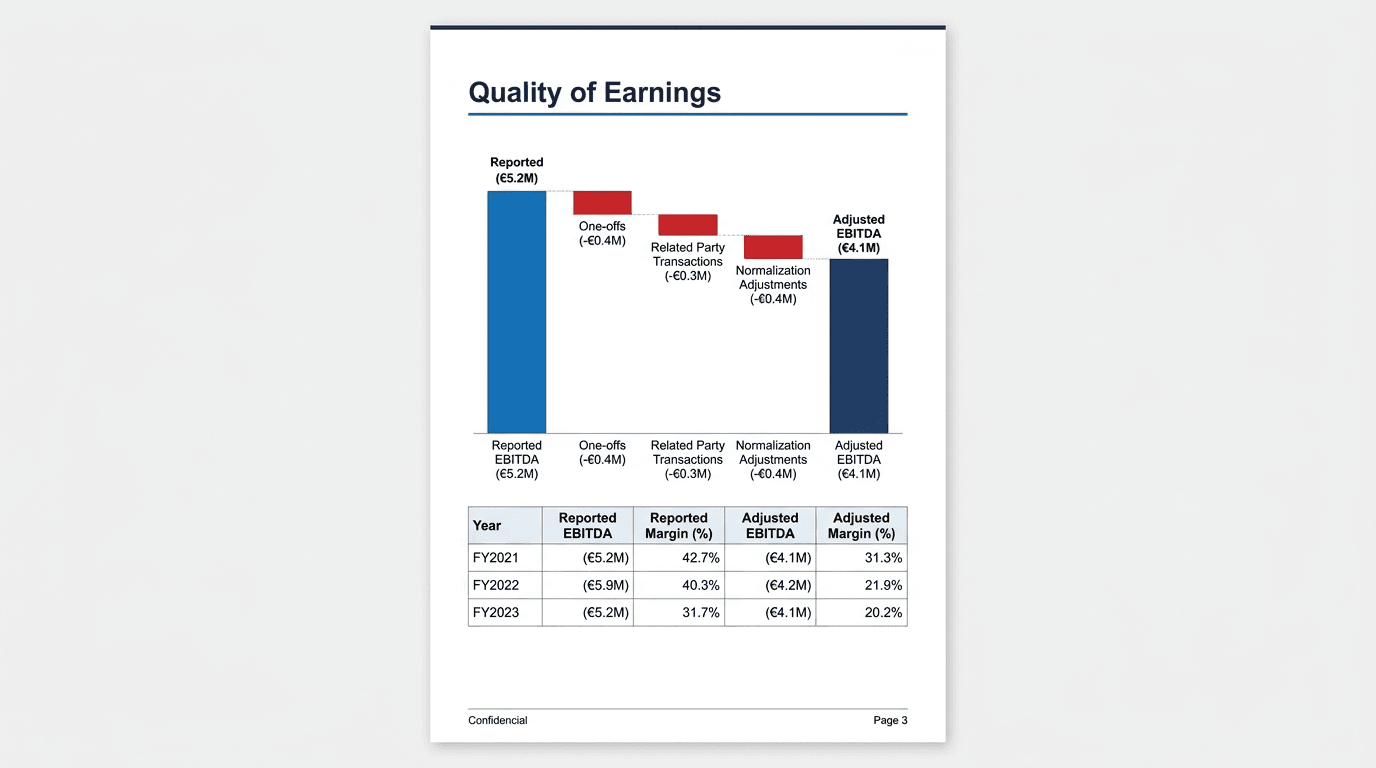
Quality of Earnings & adjustments
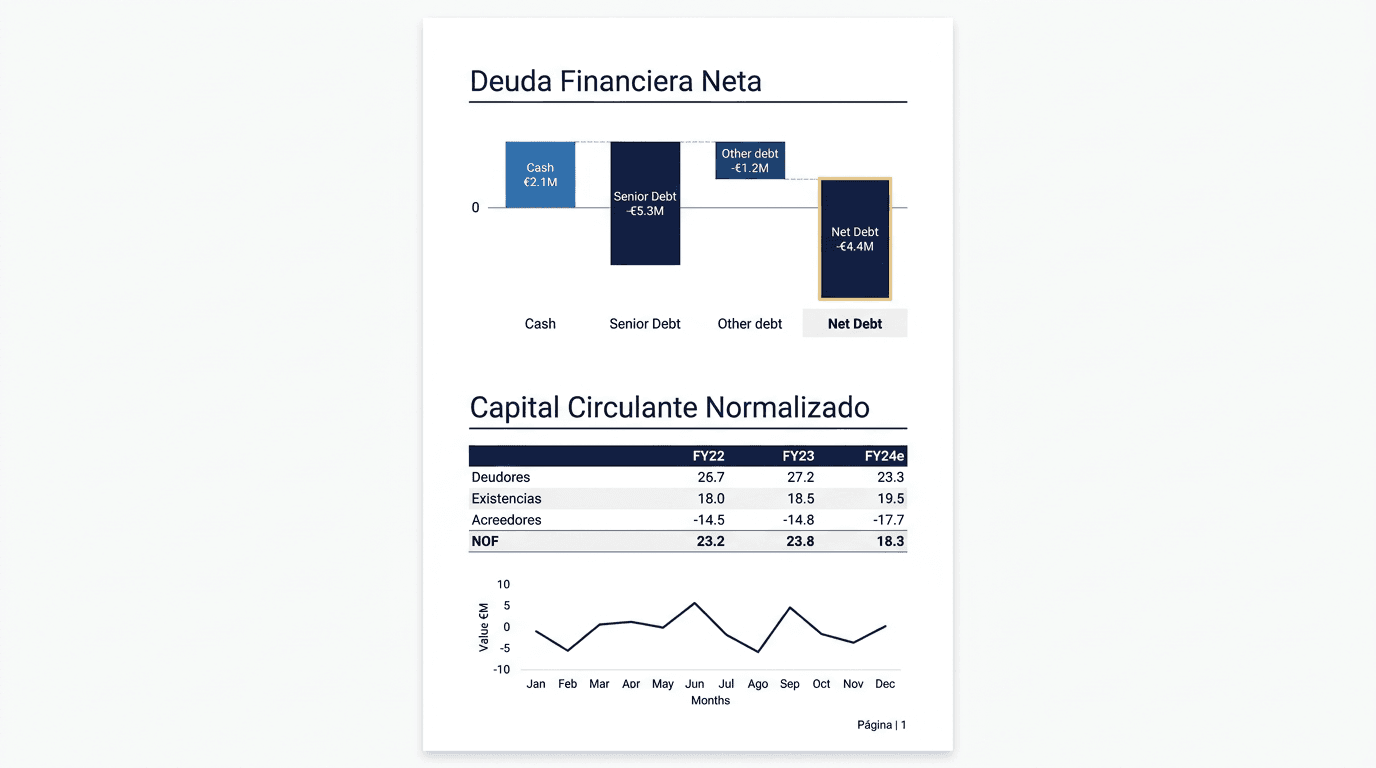
Net debt & equity bridge
Working capital & pricing mechanism
Who is it for?
For deal teams that need analytical rigor without sacrificing execution speed.
Private equity & deal teams
Faster IC packs with normalized EBITDA, debt-like items identified and NWC target calculated. From weeks to days.
Sell-side advisers
Anticipate buyer questions with structured QoE and NWC narratives. Prepare vendor DD that accelerates the process.
Family offices & corporates
Clarity on true run-rate, hidden risks and earnings quality before committing capital.
iValuate vs traditional due diligence
Compare speed and coverage of iValuate against manual DD processes.
| Feature | Traditional approach | iValuate |
|---|---|---|
| Time per full DD | 3–6 weeks | 5–10 days |
| QoE + NWC + Net Debt coverage | Variable by team | Complete framework guaranteed |
| Red flag detection | Manual, experience-dependent | Automatic with alerts |
| IC reports | Ad-hoc PowerPoint | Professional PDF/DOCX |
| Adjustment traceability | Scattered notes | Complete auditable record |
| Automatic equity bridge | Manual in Excel | Calculated with debt/cash-like items |
Frequently asked questions
Ready to get started?
Choose between individual credits or a subscription plan with full platform access.
7-day free trial with full access. Credit card required. No charge until day 8. Cancel anytime.