Table of Contents9 sections
01 The Strategic Imperative of Transfer Pricing Compliance
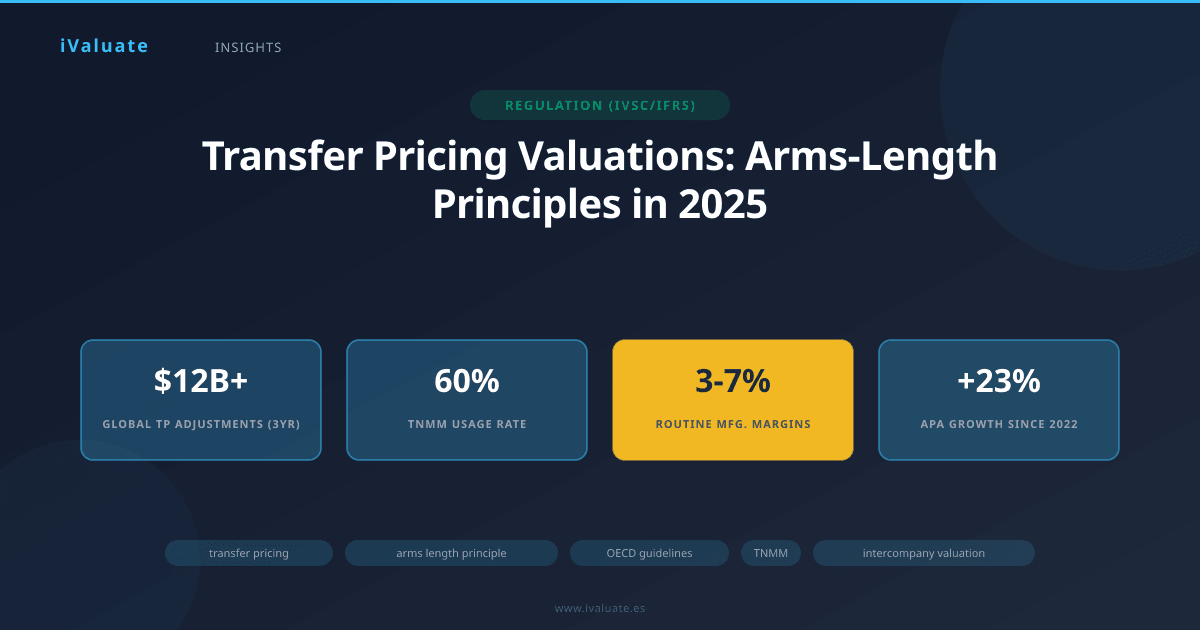
Transfer pricing has evolved from a technical tax compliance exercise into a critical strategic function for multinational enterprises (MNEs). As of 2025, tax authorities worldwide have collected over $12 billion in additional revenue from transfer pricing adjustments and penalties in the past three years alone, underscoring the heightened scrutiny on intercompany transactions. The arms-length principle—requiring that transactions between related parties mirror those between independent entities—remains the cornerstone of international transfer pricing regulation, yet its application has become increasingly sophisticated and contentious.
The landscape has shifted dramatically since the OECD's Base Erosion and Profit Shifting (BEPS) Action Plan implementation. With over 140 jurisdictions now participating in the OECD/G20 Inclusive Framework, transfer pricing documentation requirements have intensified, and tax authorities have gained unprecedented access to data through Country-by-Country Reporting (CbCR). For CFOs and tax directors, the stakes have never been higher: a single mispriced intercompany transaction can trigger audits, double taxation, and reputational damage that extends far beyond the immediate financial impact.
The arms-length principle requires that the conditions of commercial or financial relations between associated enterprises not differ from those which would be made between independent enterprises under comparable circumstances.
02 The Arms-Length Principle: Foundation and Evolution
The arms-length principle, codified in Article 9 of the OECD Model Tax Convention, serves as the international standard for pricing transactions between related parties. This principle recognizes that MNEs operate as integrated businesses but requires that each entity within the group be treated as a separate taxpayer for tax purposes. The fundamental challenge lies in determining what independent parties would have agreed upon in comparable circumstances—a determination that requires both art and science.
In 2025, the application of the arms-length principle has become more nuanced. Tax authorities increasingly recognize that strict comparability is often impossible, particularly for unique intangibles, integrated supply chains, and digital business models. The OECD Transfer Pricing Guidelines, most recently updated in 2024, emphasize substance over form, requiring detailed functional analysis that examines the functions performed, assets employed, and risks assumed by each party to an intercompany transaction.
Functional Analysis: The Critical First Step
Before selecting a transfer pricing method, practitioners must conduct a rigorous functional analysis. This analysis identifies the economically significant activities and responsibilities of each entity, including:
- Research and development activities: Who develops intellectual property, and who bears the costs and risks of R&D failure?
- Manufacturing and production: Which entities own production facilities, manage inventory risk, and control quality?
- Marketing and distribution: Who builds brand value, manages customer relationships, and assumes market risk?
- Strategic decision-making: Where are key business decisions made regarding product development, pricing, and market entry?
- Financing activities: Who provides capital, manages currency risk, and determines capital structure?
The functional analysis directly informs the selection of tested parties and transfer pricing methods. Entities performing routine functions with limited risk typically warrant lower returns, while those controlling valuable intangibles or assuming significant entrepreneurial risk should receive commensurate compensation.
03 OECD Transfer Pricing Methods: A Comprehensive Framework
The OECD Guidelines recognize five primary transfer pricing methods, divided into traditional transaction methods and transactional profit methods. Each method has specific applications, advantages, and limitations that practitioners must carefully consider based on the nature of the transaction and availability of comparable data.
Traditional Transaction Methods
Comparable Uncontrolled Price (CUP) Method: The CUP method compares the price charged in a controlled transaction to the price charged in a comparable uncontrolled transaction under comparable circumstances. When reliable comparables exist, the CUP method is generally preferred as the most direct measure of arms-length pricing. In practice, however, finding truly comparable transactions is challenging. Product differences, contractual terms, market conditions, and geographic factors can all materially affect comparability.
A European pharmaceutical company recently applied the CUP method to price active pharmaceutical ingredients (APIs) sold between its Irish manufacturing subsidiary and Swiss parent. By identifying three independent API transactions involving similar molecules, delivery terms, and volume commitments, the company established an arms-length price range of $1,850-$2,100 per kilogram, supporting its intercompany price of $1,975 per kilogram.
Resale Price Method (RPM): The RPM begins with the price at which a product purchased from a related party is resold to an independent party. An appropriate gross margin is then subtracted to arrive at an arms-length price for the original transfer. This method works well for distribution activities where the distributor adds relatively limited value. The key challenge lies in determining an appropriate gross margin based on comparable independent distributors.
Cost Plus Method (CPM): The CPM adds an appropriate markup to the costs incurred by a supplier of goods or services in a controlled transaction. This method is particularly suitable for manufacturing, assembly, or service provision where the tested party performs routine functions. In 2025, we observe cost-plus markups ranging from 5-8% for routine manufacturing to 15-25% for specialized contract research services, depending on the complexity and risks involved.
Transactional Profit Methods
Transactional Net Margin Method (TNMM): The TNMM has become the most widely applied transfer pricing method globally, used in approximately 60% of intercompany transactions according to recent surveys. This method examines the net profit margin relative to an appropriate base (such as costs, sales, or assets) that a taxpayer realizes from a controlled transaction, comparing it to the net profit margin realized by comparable independent companies.
The popularity of TNMM stems from its practical advantages: it is less sensitive to product differences than traditional methods, requires less detailed comparability adjustments, and benefits from the availability of financial data on independent companies through commercial databases. However, TNMM requires careful selection of the profit level indicator (PLI)—whether operating margin on sales, return on assets, return on costs, or another metric—based on the functional profile of the tested party.
In 2025, median operating margins for routine manufacturing entities range from 3-7%, while limited-risk distributors typically achieve 2-5% operating margins on sales. These benchmarks vary significantly by industry and geographic region.
Consider a U.S.-based technology company with a contract manufacturing subsidiary in Vietnam. The subsidiary performs assembly operations using components and designs provided by the U.S. parent, with limited decision-making authority and minimal inventory risk. A TNMM analysis identified twelve comparable contract manufacturers in Southeast Asia, yielding an interquartile range of operating margins from 4.2% to 6.8% on total costs. The company's tested party achieved a 5.5% margin, comfortably within the arms-length range.
Profit Split Method (PSM): The PSM divides the combined profits from controlled transactions between related parties based on their relative contributions. This method is particularly appropriate when both parties make unique and valuable contributions, such as when both contribute significant intangibles or when transactions are so interrelated that they cannot be evaluated separately.
The PSM has gained prominence following BEPS Action 8-10, which emphasized its use for transactions involving unique intangibles and integrated global value chains. In 2025, we observe increased application of PSM in digital business models, pharmaceutical co-development arrangements, and integrated supply chains where multiple entities contribute to value creation.
04 Valuing Intangible Assets in Intercompany Transactions
Intangible assets represent perhaps the most challenging aspect of transfer pricing. Unlike tangible goods or routine services, intangibles such as patents, trademarks, trade secrets, customer relationships, and proprietary processes lack observable market prices and may be unique to the enterprise. The OECD's revised guidance on hard-to-value intangibles (HTVI), implemented in response to BEPS Action 8, has fundamentally changed how tax authorities scrutinize intercompany transfers of intellectual property.
The DEMPE Framework
The DEMPE framework requires analysis of which entities perform Development, Enhancement, Maintenance, Protection, and Exploitation functions related to intangibles. Legal ownership alone is insufficient to justify receiving all returns from an intangible; the entity must also control the DEMPE functions and assume related risks. This represents a significant shift from historical practice, where legal ownership often determined profit allocation.
A recent case illustrates this principle: A multinational consumer goods company transferred trademark rights from its U.S. parent to a Luxembourg IP holding company in 2018. During a 2024 audit, tax authorities challenged the transaction, arguing that the U.S. entity continued to perform all substantive DEMPE functions—brand strategy, marketing investment decisions, and quality control—while the Luxembourg entity was merely a legal owner with no employees or decision-making capability. The company ultimately agreed to a $340 million adjustment, recognizing that arms-length compensation should flow to where value-creating activities occur.
Valuation Methods for Intangible Property
When valuing intercompany transfers of intangibles, practitioners typically employ one of three approaches:
- Income Approach: Projects future cash flows attributable to the intangible and discounts them to present value. This method requires careful consideration of growth rates, discount rates (typically ranging from 10-18% for operating intangibles in 2025), and the intangible's remaining useful life. The income approach is particularly suitable for established intangibles with predictable cash flows.
- Market Approach: Seeks comparable transactions involving similar intangibles between independent parties. While conceptually straightforward, finding truly comparable intangible transfers is exceedingly rare, limiting this method's practical application.
- Cost Approach: Estimates the cost to recreate or replace the intangible. This method is most appropriate for process intangibles or technical know-how where development costs can be reliably measured, but it may understate value for highly successful intangibles that generate returns far exceeding their development costs.
In practice, many valuations employ multiple methods to triangulate a reasonable value range. For a pharmaceutical patent, practitioners might use the income approach as the primary method, supported by a cost approach analysis of R&D expenditures and market approach data from comparable licensing agreements.
05 Documentation Requirements and Controversy Management
The BEPS Action 13 three-tiered documentation structure—Master File, Local File, and Country-by-Country Report—has become standard practice globally. As of 2025, over 90 jurisdictions require some form of transfer pricing documentation, with penalties for non-compliance ranging from fixed fees to percentage-based penalties on adjusted income.
Master File and Local File Requirements
The Master File provides a high-level overview of the MNE's global business operations, intangible property, financing arrangements, and financial position. It enables tax authorities to assess transfer pricing risks across the entire group. The Local File provides detailed information about specific intercompany transactions, including functional analysis, selection and application of transfer pricing methods, and financial data supporting the analysis.
Preparation of robust documentation requires significant resources. A typical Fortune 500 company with operations in 30+ jurisdictions may spend $2-5 million annually on transfer pricing documentation, economic studies, and compliance. However, this investment pales in comparison to the potential cost of inadequate documentation: transfer pricing adjustments, penalties, and the management time consumed by protracted audits.
Advance Pricing Agreements
Advance Pricing Agreements (APAs) provide certainty by allowing taxpayers to agree with one or more tax authorities on transfer pricing methodology in advance. Bilateral and multilateral APAs, involving tax authorities from multiple jurisdictions, offer the greatest protection against double taxation. The average time to negotiate a bilateral APA has decreased from 42 months in 2020 to approximately 34 months in 2025, reflecting improved cooperation between competent authorities.
APA applications have increased 23% since 2022, driven by taxpayers seeking certainty in an environment of heightened enforcement. The most common APA subjects include manufacturing arrangements (35% of applications), distribution activities (28%), and services (22%), with intangible property transactions comprising the remaining 15%.
06 Industry-Specific Considerations
Digital Economy and Platform Businesses
Digital businesses present unique transfer pricing challenges due to their reliance on intangibles, user data, and network effects. The OECD's Pillar One proposal, expected to be implemented in phases beginning in 2025-2026, will reallocate taxing rights over the largest and most profitable MNEs to market jurisdictions, fundamentally changing how digital businesses approach transfer pricing.
For digital platforms, determining the value created by user participation, data collection, and network effects requires sophisticated analysis. A social media company, for example, must consider how to compensate local marketing entities that drive user acquisition versus the central entity that develops and maintains the platform technology. Traditional transfer pricing methods often struggle to capture these dynamics, leading to increased use of profit split approaches.
Financial Services
Financial institutions face specialized transfer pricing issues related to intra-group financing, guarantees, and cash pooling arrangements. The arms-length interest rate on intercompany loans must reflect the borrower's creditworthiness, considering both its standalone credit profile and any implicit support from group membership. In 2025, we observe arms-length spreads over SOFR ranging from 50-150 basis points for investment-grade subsidiaries to 300-600 basis points for higher-risk entities.
Life Sciences and Pharmaceuticals
Pharmaceutical companies navigate particularly complex transfer pricing issues due to high-value intangibles, long development cycles, and integrated global operations. Cost-sharing arrangements, where multiple group entities share R&D costs and resulting intangibles, require careful structuring and valuation. Recent tax authority challenges have focused on whether buy-in payments—compensating existing intangible value when joining a cost-sharing arrangement—adequately reflect the value of pre-existing intellectual property.
07 Emerging Trends and Future Outlook
Several trends are reshaping transfer pricing practice in 2025 and beyond:
Data Analytics and Technology: Tax authorities increasingly employ sophisticated data analytics to identify transfer pricing risks, comparing taxpayers' reported results against industry benchmarks and peer companies. MNEs must adopt similar analytical capabilities to defend their positions. Advanced transfer pricing software now enables real-time monitoring of intercompany pricing against arms-length ranges, allowing companies to identify and address issues proactively.
Supply Chain Restructuring: Geopolitical tensions, pandemic-driven resilience concerns, and environmental considerations are driving supply chain reconfiguration. These restructurings often involve transferring functions, assets, and risks between jurisdictions, triggering complex transfer pricing implications. Proper valuation of transferred business opportunities and exit charges has become critical.
ESG and Transfer Pricing: Environmental, social, and governance considerations are beginning to influence transfer pricing. Questions arise about how to allocate costs and benefits of sustainability initiatives, whether green intangibles command premium pricing, and how carbon pricing mechanisms affect intercompany transactions.
Increased Transparency and Cooperation: The trend toward greater transparency continues, with public Country-by-Country Reporting requirements implemented in the EU and under consideration elsewhere. Simultaneously, improved dispute resolution mechanisms, including mandatory binding arbitration under the Multilateral Instrument, are helping resolve transfer pricing controversies more efficiently.
08 Practical Implementation: A Roadmap for Compliance
For organizations seeking to strengthen their transfer pricing compliance, a systematic approach is essential:
- Conduct comprehensive functional analysis: Document in detail the functions performed, assets employed, and risks assumed by each entity in material intercompany transactions.
- Develop robust economic analysis: Select appropriate transfer pricing methods based on functional analysis, transaction characteristics, and data availability. Perform thorough benchmarking studies using reliable data sources.
- Implement operational controls: Ensure that actual operations align with contractual arrangements and transfer pricing policies. Misalignment between documentation and reality is a primary audit trigger.
- Prepare contemporaneous documentation: Maintain Master File and Local File documentation that meets local requirements and can withstand scrutiny. Documentation should be prepared before tax return filing deadlines.
- Monitor and update regularly: Transfer pricing is not a one-time exercise. Economic conditions change, business models evolve, and tax laws are amended. Annual review and updates are essential.
- Consider APAs for high-risk transactions: For material transactions involving unique intangibles or where significant uncertainty exists, APAs provide valuable certainty despite the time and cost involved.
Effective transfer pricing requires integration across tax, finance, legal, and business functions. It cannot be relegated to a year-end compliance exercise but must be embedded in business planning and decision-making.
09 Conclusion: Navigating Complexity with Confidence
Transfer pricing has evolved into one of the most technically demanding areas of corporate taxation, requiring expertise in valuation, economics, tax law, and business strategy. The arms-length principle remains the foundation, but its application has become increasingly sophisticated, particularly for intangibles, digital businesses, and integrated value chains. With tax authorities armed with unprecedented data and analytical capabilities, the compliance burden on MNEs continues to intensify.
Success in this environment requires robust processes, quality data, and sophisticated analytical capabilities. Organizations must invest in functional analysis, economic studies, and documentation that can withstand scrutiny from multiple tax authorities with potentially conflicting perspectives. The cost of inadequate transfer pricing—measured in adjustments, penalties, double taxation, and reputational damage—far exceeds the investment required for proper compliance.
Looking ahead, the transfer pricing landscape will continue to evolve. The implementation of Pillar One, ongoing digitalization, supply chain transformation, and heightened focus on substance over form will create new challenges and opportunities. Organizations that approach transfer pricing strategically—integrating it into business planning, leveraging technology for monitoring and analysis, and maintaining open dialogue with tax authorities—will be best positioned to navigate this complexity.
For professionals managing these challenges, platforms like iValuate provide essential tools for conducting the rigorous economic analysis that underpins defensible transfer pricing. By combining technical expertise with sophisticated analytical capabilities, organizations can approach transfer pricing with confidence, ensuring compliance while optimizing their global tax position within the bounds of the arms-length principle.